
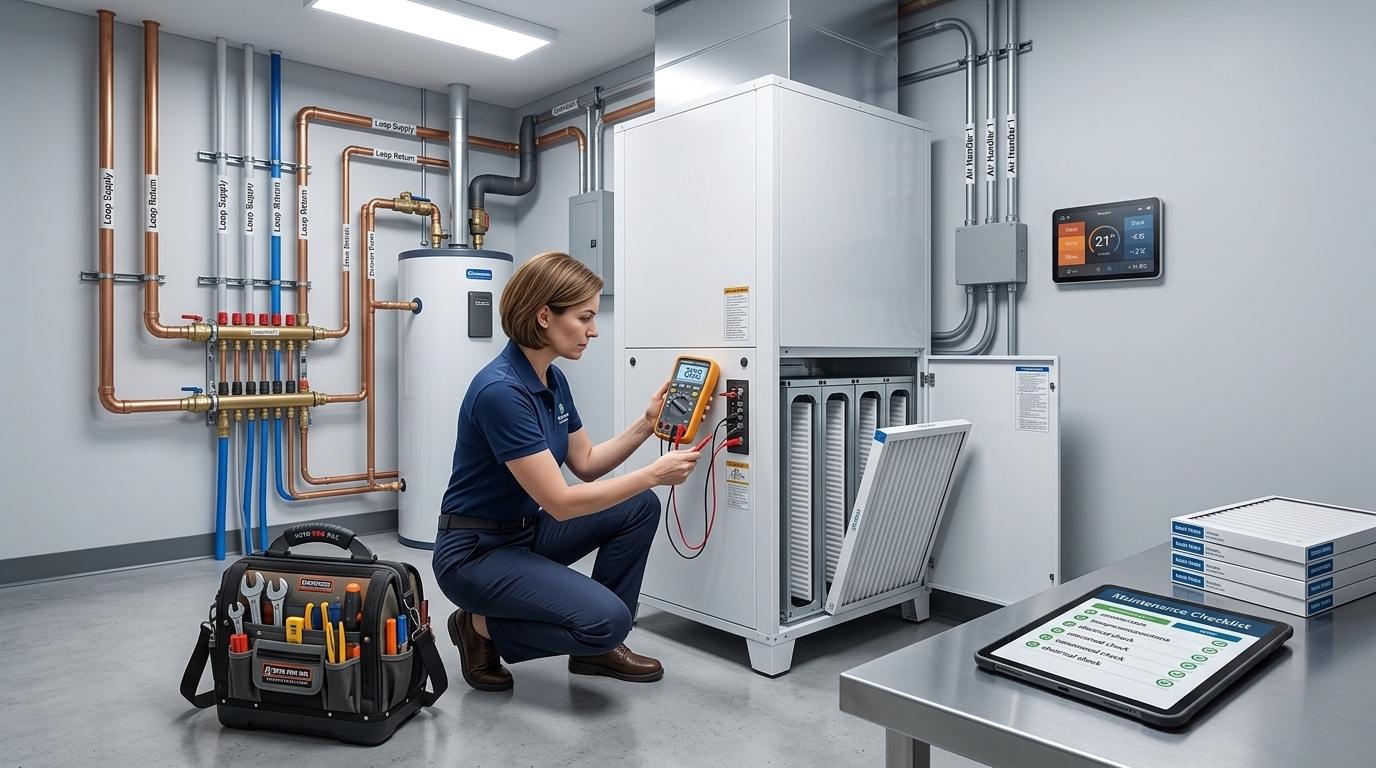
Heating and cooling systems are among the most important mechanical systems in any home. They operate throughout the year to maintain comfortable indoor temperatures, improve indoor air quality, and help regulate humidity. Like any complex mechanical equipment, HVAC systems require routine maintenance to continue operating efficiently and reliably.
One of the most common questions homeowners ask is how often an HVAC system should be professionally serviced. The answer depends on several factors, including the type of equipment, system age, usage patterns, local climate, and manufacturer recommendations. However, most HVAC professionals agree that regular preventative maintenance is one of the most effective ways to reduce unexpected breakdowns and extend equipment life.
Ignoring routine maintenance may not cause immediate problems, but over time it can lead to declining efficiency, higher energy bills, increased wear on components, and more expensive repairs.
Many homeowners schedule professional HVAC maintenance service each year to keep their heating and cooling equipment operating safely and efficiently.
Quick Answer
Most residential HVAC systems should receive professional maintenance at least once each year, while systems that provide both heating and cooling—such as heat pumps—often benefit from two service visits annually, typically in the spring and fall. Routine maintenance helps improve efficiency, reduce repair costs, extend equipment lifespan, and maintain reliable indoor comfort.
Key Takeaways
- Most HVAC systems should be serviced at least annually.
- Heat pumps often benefit from twice-yearly maintenance.
- Preventative maintenance improves energy efficiency.
- Regular inspections help identify small problems early.
- Clean HVAC equipment generally performs more efficiently.
- Maintenance may help extend equipment lifespan.
- Seasonal inspections prepare systems for heavy use.
- Professional service complements homeowner maintenance.
Why Regular HVAC Maintenance Matters
Routine maintenance is about much more than simply replacing an air filter.
Professional HVAC inspections evaluate the overall condition of the heating and cooling system while identifying developing issues before they become costly repairs.
Regular maintenance may help:
- Improve energy efficiency
- Reduce operating costs
- Extend equipment lifespan
- Improve indoor comfort
- Maintain manufacturer warranty requirements
- Reduce unexpected breakdowns
- Improve system reliability
According to the U.S. Department of Energy, properly maintained HVAC equipment generally operates more efficiently than neglected systems, helping homeowners reduce energy consumption over time.
General Service Recommendations
Although maintenance schedules vary by equipment type, several general guidelines apply to most residential HVAC systems.
Gas Furnaces
Most gas furnaces should receive professional maintenance once each year before the heating season.
Annual inspections commonly include:
- Burner inspection
- Heat exchanger evaluation
- Safety control testing
- Airflow verification
- Electrical inspection
- Filter replacement recommendations
Scheduling service before winter helps ensure the furnace is ready for extended operation.
Central Air Conditioners
Air conditioning systems are typically serviced once each year before warmer weather arrives.
Professional maintenance often includes:
- Coil cleaning
- Refrigerant inspection
- Electrical testing
- Condensate drain inspection
- Fan operation verification
- Thermostat testing
Spring maintenance helps prepare cooling equipment for increased summer demand.
Heat Pumps
Heat pumps operate during both heating and cooling seasons.
Because they work year-round, many HVAC professionals recommend servicing heat pumps twice each year.
A typical schedule includes:
- Spring cooling inspection
- Fall heating inspection
Routine HVAC maintenance plan programs often include seasonal inspections designed specifically for year-round HVAC equipment.
Factors That Influence Service Frequency
Although annual maintenance is appropriate for many homes, some HVAC systems may benefit from more frequent inspections.
Factors that can increase maintenance needs include:
- Older HVAC equipment
- Heavy year-round use
- Homes with multiple pets
- High indoor dust levels
- Allergies or respiratory concerns
- Commercial use
- Poor indoor air quality
In these situations, additional maintenance visits may help preserve system efficiency and reliability.
What Happens During Professional HVAC Maintenance?
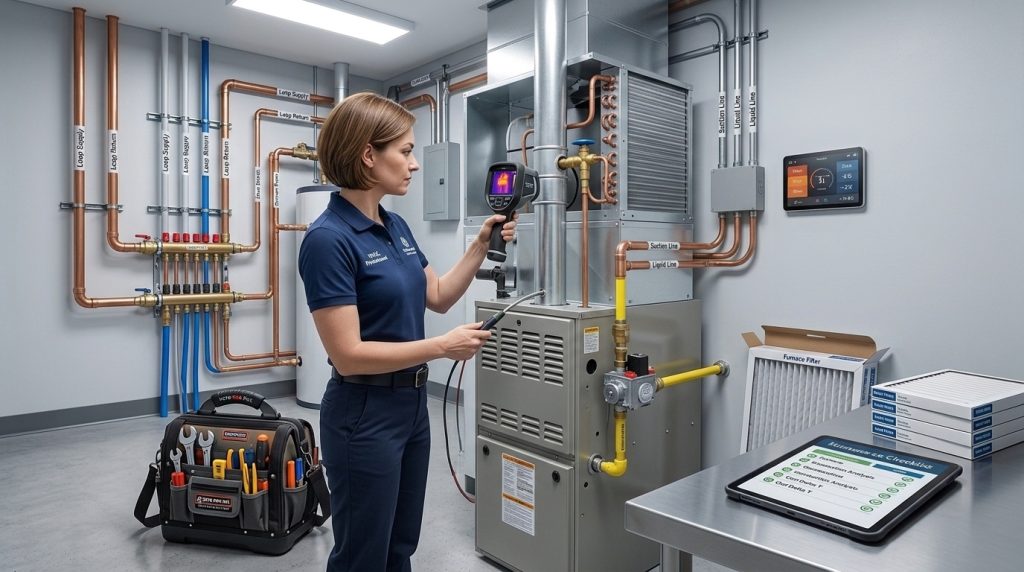
A comprehensive maintenance visit involves much more than a quick visual inspection.
Technicians typically evaluate:
- Air filters
- Blower components
- Refrigerant levels
- Electrical connections
- Motors
- Thermostat operation
- Airflow
- Safety controls
- Condensate drainage
- Overall equipment condition
The goal is to identify small issues before they affect comfort or cause unexpected equipment failures.
Homeowner Maintenance vs. Professional HVAC Maintenance
While homeowners can perform several routine maintenance tasks, professional HVAC service involves specialized inspections, testing equipment, and adjustments that require technical expertise.
Tasks Homeowners Can Perform
Simple maintenance tasks include:
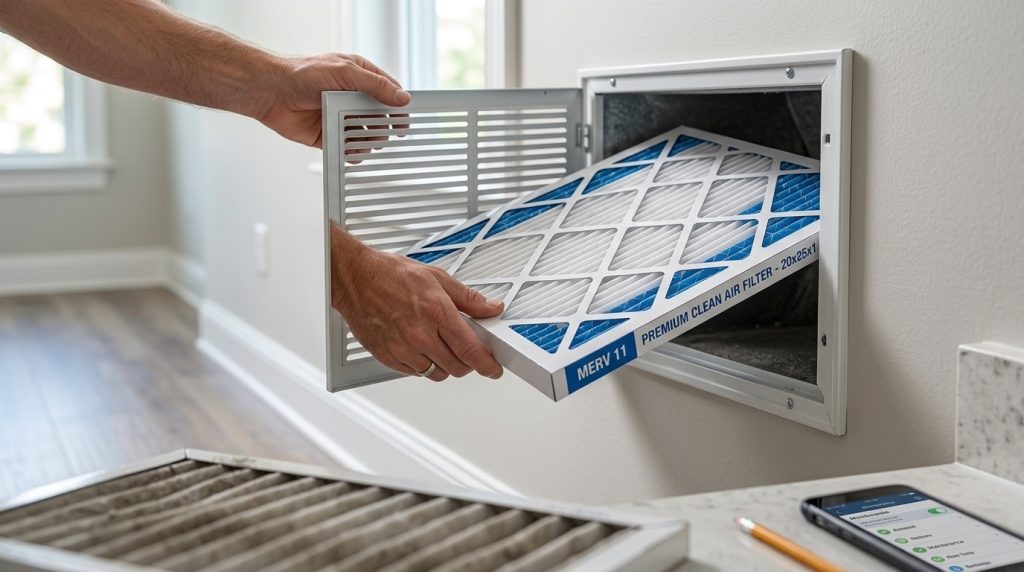
- Replacing or cleaning air filters
- Keeping outdoor units free of leaves and debris
- Making sure supply and return vents remain unobstructed
- Monitoring thermostat settings
- Watching for unusual noises or odors
- Keeping vegetation trimmed around outdoor equipment
These basic steps can help support system efficiency between professional visits.
Tasks Best Left to HVAC Professionals
Professional technicians typically perform services such as:
- Refrigerant testing
- Electrical inspections
- Motor performance checks
- Airflow measurements
- Safety control testing
- Heat exchanger inspections
- Coil cleaning
- Condensate drain cleaning
- System performance verification
These inspections help identify developing issues before they become major repairs.
Signs Your HVAC System Needs Service Sooner
Even with annual maintenance, HVAC systems occasionally require additional attention.
Homeowners should consider scheduling service if they notice:
- Rising utility bills
- Weak airflow
- Uneven room temperatures
- Unusual noises
- Burning or musty odors
- Frequent cycling
- Poor humidity control
- Reduced heating or cooling performance
Prompt diagnosis often helps prevent more extensive repairs and minimizes system downtime.
Benefits of an HVAC Maintenance Plan
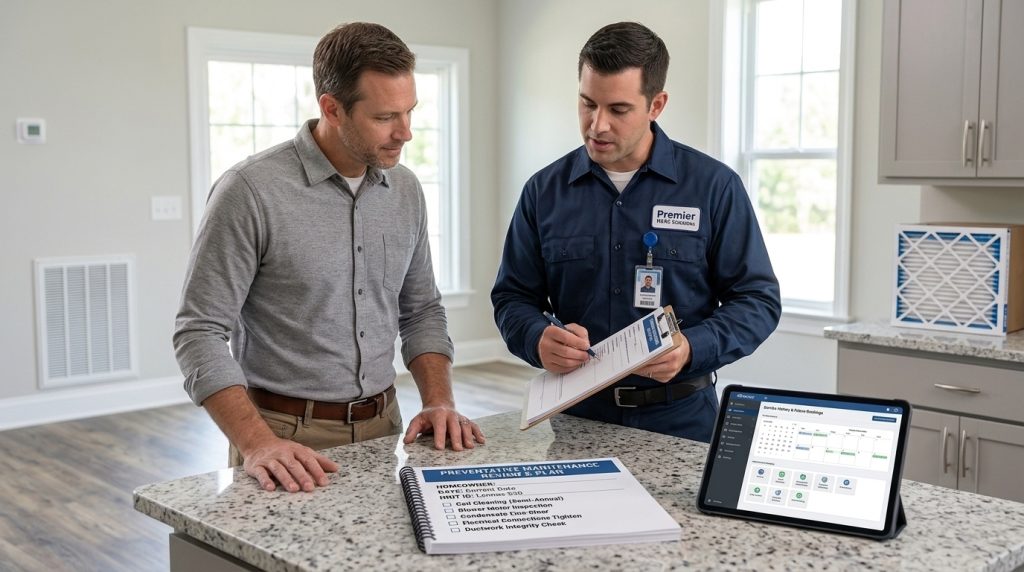
Many HVAC companies offer preventative maintenance plans that include scheduled inspections throughout the year.
A professional HVAC maintenance plan may provide benefits such as:
- Regular seasonal inspections
- Priority scheduling
- Improved equipment reliability
- Better energy efficiency
- Early identification of worn components
- Reduced likelihood of emergency repairs
Routine maintenance programs also help homeowners stay on schedule without needing to remember seasonal service appointments.
Does Regular Maintenance Save Money?
Although maintenance involves an ongoing investment, many homeowners find that preventative service reduces long-term ownership costs.
Potential financial benefits include:
- Lower utility bills
- Fewer unexpected repairs
- Longer equipment lifespan
- Improved operating efficiency
- Reduced risk of emergency service calls
According to the U.S. Environmental Protection Agency, maintaining efficient HVAC equipment and following recommended indoor air quality practices can contribute to healthier indoor environments while supporting energy-efficient operation.
The EPA also recommends replacing filters regularly and maintaining HVAC equipment as part of an overall indoor air quality strategy. Indoor air quality best practices
The U.S. Environmental Protection Agency also recognizes ENERGY STAR certified heating and cooling equipment as an important part of improving residential energy efficiency.
Choosing an HVAC Service Provider
Routine maintenance is most effective when performed by experienced HVAC professionals who understand system design, diagnostics, and manufacturer recommendations.
When searching for reliable HVAC service near me, homeowners may wish to consider:
- Licensing and insurance
- Experience with multiple HVAC brands
- Preventative maintenance programs
- Emergency service availability
- Customer reviews
- Warranty support
- Professional certifications
Many homeowners also review public business profiles to better understand customer experiences, responsiveness, and overall service quality before selecting an HVAC contractor.
Conclusion
Routine HVAC maintenance is one of the simplest and most effective ways to protect a home’s heating and cooling system. Whether the equipment includes a furnace, central air conditioner, heat pump, or a combination of systems, regular inspections help improve efficiency, maintain comfort, and reduce the likelihood of unexpected breakdowns.
While homeowners can perform basic maintenance tasks such as replacing filters and keeping outdoor equipment clean, professional service remains essential for inspecting mechanical, electrical, and refrigerant components that require specialized knowledge.
For most homes, annual maintenance provides a solid foundation for reliable HVAC performance, while year-round systems such as heat pumps often benefit from inspections in both the spring and fall. Investing in preventative maintenance today can contribute to lower operating costs, improved comfort, and longer equipment life in the years ahead.
Frequently Asked Questions
How often should an HVAC system be professionally serviced?
Most residential HVAC systems should receive professional maintenance at least once each year. Heat pumps, which provide both heating and cooling, often benefit from two maintenance visits annually—typically in the spring and fall.
Is annual HVAC maintenance really necessary?
Yes. Regular HVAC maintenance service helps identify developing problems early, improves energy efficiency, reduces unexpected breakdowns, and may extend the lifespan of heating and cooling equipment.
What happens during an HVAC maintenance visit?
A professional technician typically inspects:
- Air filters
- Refrigerant levels
- Electrical connections
- Motors and fans
- Thermostat operation
- Safety controls
- Airflow
- Coils
- Condensate drains
- Overall system performance
The exact checklist varies depending on the equipment type.
Should heat pumps be serviced more often than furnaces?
Generally, yes. Because heat pumps operate throughout both heating and cooling seasons, many HVAC professionals recommend servicing them twice each year to maintain peak performance.
Can I maintain my HVAC system myself?
Homeowners can perform basic maintenance such as:
- Replacing air filters
- Keeping outdoor units clean
- Removing debris
- Monitoring thermostat settings
- Keeping vents unobstructed
Professional inspections remain necessary for refrigerant testing, electrical diagnostics, airflow measurement, and safety inspections.
What are the signs that my HVAC system needs service sooner?
Common warning signs include:
- Weak airflow
- Higher utility bills
- Uneven temperatures
- Strange noises
- Burning or musty odors
- Frequent cycling
- Reduced heating or cooling performance
Any persistent issue should be evaluated by a qualified technician.
Do HVAC maintenance plans save money?
Many homeowners find that a professional HVAC maintenance plan helps reduce long-term ownership costs by improving efficiency, reducing emergency repairs, and extending equipment life.
How often should HVAC air filters be replaced?
Most disposable filters should be checked monthly and replaced every 1–3 months, depending on:
- Filter type
- Pets
- Allergies
- Indoor air quality
- System usage
Homes with pets or higher dust levels may require more frequent replacement.
Does HVAC maintenance improve indoor air quality?
Yes. Cleaning coils, replacing filters, inspecting airflow, and ensuring proper system operation can help reduce airborne dust, allergens, and other indoor pollutants while improving overall air circulation.
Can regular maintenance extend HVAC equipment life?
Yes. Preventative maintenance reduces unnecessary wear on motors, compressors, electrical components, and other mechanical parts, helping equipment operate reliably for many years.
When is the best time to schedule HVAC maintenance?
Most HVAC professionals recommend:
- Spring before air conditioning season
- Fall before heating season
Scheduling inspections before peak demand helps ensure the system is ready when it is needed most.
Why should I hire a professional HVAC contractor instead of waiting for problems?
Professional HVAC service near me allows technicians to identify small issues before they become expensive repairs. Preventative maintenance also helps improve efficiency, maintain comfort, and reduce the likelihood of unexpected system failures.