
A car accident in Houston can create instant confusion. One minute you are driving on I-45, I-10, I-69, Loop 610, Beltway 8, US 290, SH 288, Westheimer, Richmond, Shepherd, or a neighborhood street. The next minute you may be dealing with traffic, police, tow trucks, medical symptoms, insurance calls, repair estimates, and questions about who was at fault.
The first steps matter. You do not need to solve the whole claim at the scene, but you do need to protect your safety, preserve evidence, and start a clear record.
This guide explains what to do after a car accident in Houston, what documents to save, how crash reports may work, what insurance companies may ask for, and when legal guidance may be useful.
Quick Answer
After a car accident in Houston, check for injuries, call 911 when needed, move out of traffic if safe, exchange driver and insurance information, take photos and videos, collect witness details, seek medical care, track the crash report, notify insurance, keep repair and rental records, save proof of missed work, and avoid signing a settlement release before understanding the full impact of the crash.
If the crash caused injuries, disputed fault, insurance delays, missed work, or a low settlement offer, speaking with a Houston car accident lawyer may help you understand what evidence matters, what Texas deadlines may apply, and how to protect your claim.
Key Takeaways
- The first hours after a crash should focus on safety, evidence, medical care, reporting, insurance notice, and record organization.
- Houston car accident claims may involve freeway congestion, frontage roads, toll roads, downtown intersections, parking lots, rideshare zones, commercial vehicles, and hit-and-run drivers.
- Important records may include photos, videos, crash reports, medical records, repair estimates, witness details, insurance messages, wage records, rental receipts, and out-of-pocket expenses.
- Insurance companies may review fault, treatment timelines, property damage, statements, prior injuries, and available coverage.
- Texas law can affect injury deadlines and shared-fault disputes.
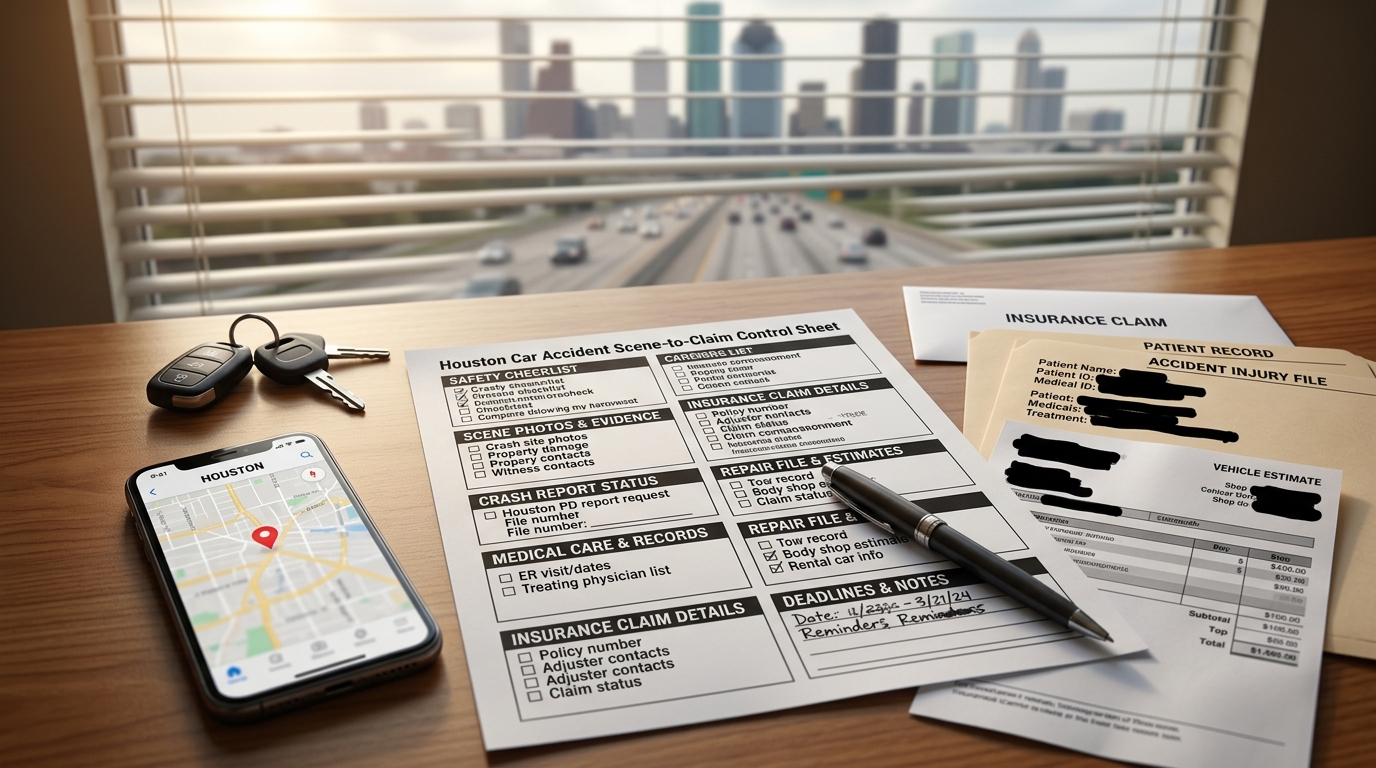
The Scene-to-Claim Control Sheet
After a crash, it helps to divide the next steps into seven control points:
- Safety
- Scene documentation
- Driver and witness information
- Medical care
- Crash report tracking
- Insurance communication
- Repair, wage, and deadline records
This keeps the claim from turning into a pile of disconnected paperwork. Each control point answers a different question: what happened, who was involved, what injuries followed, what records exist, what insurance applies, and what deadlines matter.
Control Point 1: Safety Before Paperwork
Your first priority is safety.
Check yourself, passengers, and others for injuries. Call 911 if anyone is hurt, confused, dizzy, trapped, unconscious, bleeding, or reporting pain.
Move out of active traffic if it is safe and legal to do so. Houston crashes can become more dangerous when vehicles remain in travel lanes, especially on high-speed corridors, ramps, frontage roads, and freeway shoulders.
Call police when:
- Someone is injured
- A driver leaves the scene
- A vehicle cannot be moved
- Traffic is blocked
- A driver appears impaired
- The other driver has no insurance
- A commercial vehicle is involved
- There is a dispute about what happened
- The crash caused serious damage
Do not argue about fault at the scene. Keep conversations calm and factual.
Control Point 2: Capture the Scene Before It Changes
The scene can change quickly. Vehicles may move, debris may be cleared, witnesses may leave, weather may shift, and tow trucks may arrive.
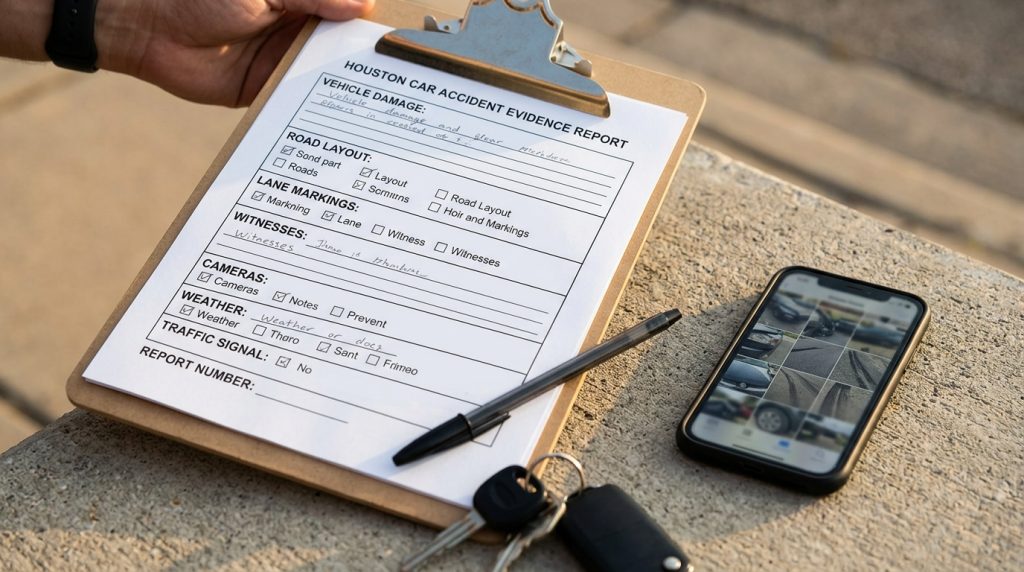
If safe, photograph:
- Vehicle damage from multiple angles
- License plates
- Final vehicle positions
- Road layout
- Lane markings
- Traffic signs and signals
- Skid marks or debris
- Weather and lighting
- Construction zones
- Nearby businesses
- Nearby cameras
- Visible injuries
- Damaged personal property
- Child seats, phones, glasses, helmets, or other damaged items
Take wide shots and close-ups. Wide shots show the roadway and vehicle positions. Close-ups show impact points, damage, debris, and details that may matter later.
Control Point 3: Collect Driver, Vehicle, and Witness Details
Exchange information with the other driver if it is safe.
Collect:
- Driver name
- Phone number
- Driver’s license information
- License plate number
- Vehicle make, model, and color
- Insurance company
- Policy number
- Vehicle owner information, if different from driver
- Passenger names, if available
- Employer or company name, if a work vehicle is involved
- Rideshare or delivery trip details, if relevant
Ask witnesses for names and phone numbers. Witnesses may include other drivers, pedestrians, passengers, nearby workers, security staff, parking-lot attendants, delivery drivers, or store employees.
A witness who leaves the scene may be difficult to find later.
Houston Crash Settings: Why Location Matters
Houston car accident claims often depend on the setting.
Freeways, Loops, and Toll Roads
Crashes on I-45, I-10, I-69/US 59, Loop 610, Beltway 8, US 290, SH 288, Hardy Toll Road, Westpark Tollway, or Grand Parkway may involve speed, merging, sudden stops, lane changes, frontage-road conflicts, commercial vehicles, or multi-car impacts.
Evidence may include:
- Dashcam footage
- Lane and exit details
- Tow records
- Vehicle resting positions
- Multi-vehicle witness information
- Crash report details
- Repair estimates
- Medical records
Downtown, Midtown, Galleria, Medical Center, and Event-Area Crashes
Dense Houston areas may involve rideshare pickups, pedestrians, scooters, delivery drivers, buses, parking garages, event traffic, hotel entrances, and business cameras.
Evidence may include:
- Business camera notes
- Parking garage details
- Rideshare receipts
- Crosswalk and signal photos
- Witness names
- Police report information
- Time-stamped photos
Parking Lots, Apartments, Gas Stations, and Retail Centers
Parking-lot crashes may involve backing vehicles, unclear right-of-way, pedestrians, poor visibility, tight lanes, delivery vehicles, and cameras controlled by businesses or property owners.
Evidence may include:
- Store or property camera locations
- Vehicle-position photos
- Parking-lot layout photos
- Witness information
- Incident report details
- Damage photos before repair
- Medical records
Construction Zones and Flood-Prone Roads
Houston crashes may also involve construction barrels, lane shifts, road debris, standing water, poor lighting, or sudden traffic changes.
Evidence may include:
- Construction-zone photos
- Warning sign photos
- Road condition notes
- Weather details
- Dashcam footage
- Witness statements
- Vehicle damage photos
Control Point 4: Get Medical Care and Track Symptoms
Medical care matters even if symptoms seem mild at first. Adrenaline can hide pain after a crash.
Seek care for:
- Headaches
- Dizziness
- Confusion
- Neck pain
- Back pain
- Shoulder pain
- Knee pain
- Chest pain
- Abdominal pain
- Numbness or tingling
- Trouble sleeping
- Anxiety after the crash
- Symptoms that appear or worsen later
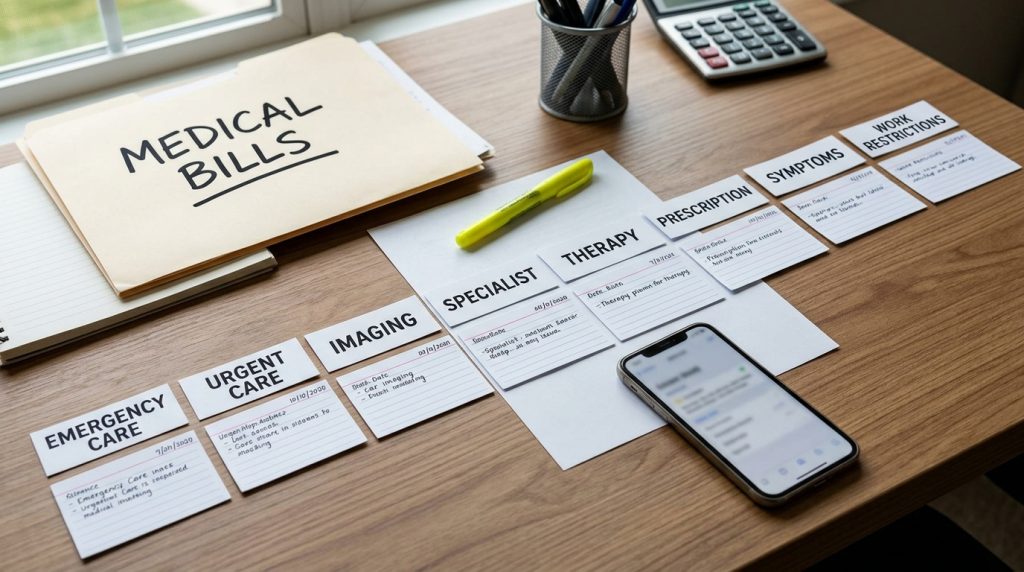
Save records from:
- Emergency medical services
- Emergency rooms
- Urgent care clinics
- Primary care doctors
- Orthopedic specialists
- Neurologists
- Imaging centers
- Physical therapy providers
- Pharmacies
Also save:
- Discharge instructions
- Imaging reports
- Referral paperwork
- Prescription receipts
- Medical bills
- Follow-up appointment notes
- Work restriction notes
- Therapy attendance records
Insurance companies often review treatment timelines closely. Delayed care, missed appointments, unclear symptoms, or missing records may create disputes.
Control Point 5: Track the Houston Crash Report
A crash report can become an important part of a claim. It may document the accident date, location, drivers, vehicles, insurance information, reported injuries, citations, witness information, contributing factors, and officer notes.
The Houston Police Department’s public information materials describe an accident or crash report as a Texas Peace Officers’ Accident Report completed by a Houston police officer and filed with the Texas Department of Transportation. HPD also says accident reports require processing time before they are available to the public.
TxDOT is the statewide custodian of Texas crash records. A Texas Peace Officer’s Crash Report can often be obtained through the TxDOT Crash Report Online Purchase System by eligible requesters.
Save:
- Crash report number
- Responding agency
- Officer name, if known
- Crash date
- Crash time
- Crash location
- Driver and vehicle details
- Insurance information
- Witness details
- Citation information, if any
A crash report is helpful, but it is not the whole claim. Your photos, videos, medical records, witness information, repair estimates, and insurance messages may also matter.
Control Point 6: Notify Insurance, But Keep It Factual
After a Houston crash, you may hear from your own insurance company, another driver’s insurer, a commercial carrier, a rideshare insurer, a repair adjuster, or a medical payments representative.
You can usually provide basic facts such as:
- Date of crash
- Location
- Vehicles involved
- Policy information
- Claim number
- Whether police responded
- Whether medical care was needed
- Where the vehicle was towed
- Names of known witnesses
Avoid guessing about:
- Vehicle speed
- Distance
- Timing
- Visibility
- Fault
- Injury severity
- Future medical needs
- Whether you are “fine”
- What treatment will cost
If you do not know an answer, say that you do not know.
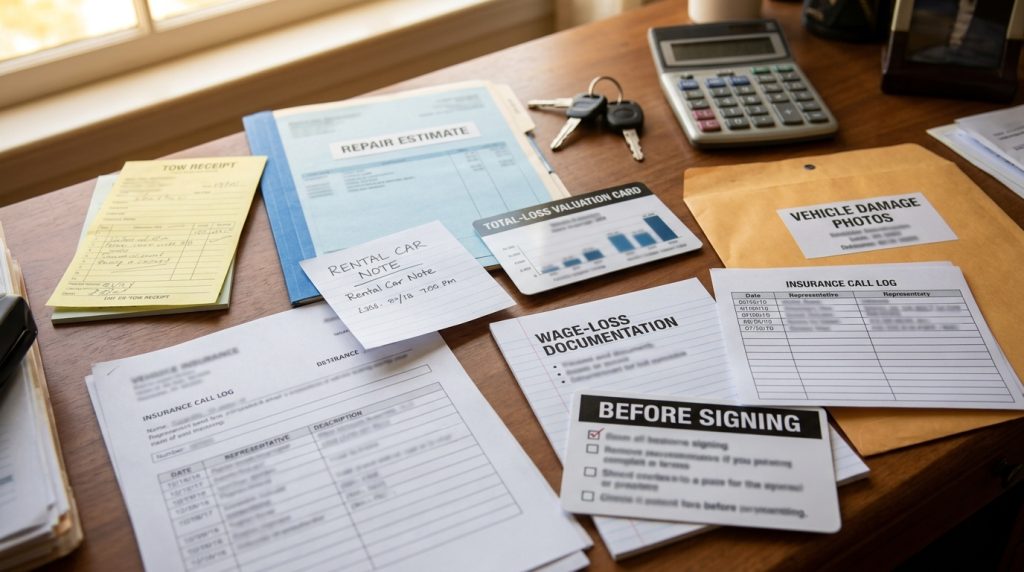
Keep an Insurance Log
Track:
- Claim number
- Adjuster name
- Company
- Phone number
- Email address
- Date of each call
- Documents requested
- What you sent
- Repair status
- Rental car details
- Recorded statement requests
- Medical authorization requests
- Settlement offers
- Denial letters
Be careful before signing settlement releases, broad medical authorizations, property damage releases, or final payment forms.
Control Point 7: Organize Repairs, Rentals, Wages, and Expenses
Vehicle damage and financial losses should be documented separately from medical care.
Save:
- Vehicle damage photos
- Repair estimates
- Supplemental repair estimates
- Body shop invoices
- Total-loss valuation paperwork
- Rental car receipts
- Towing receipts
- Storage bills
- Receipts for damaged personal property
- Child seat replacement documentation, if relevant
- Communications with repair shops
- Communications with insurers
If you missed work, save:
- Pay stubs
- Timesheets
- Employer letters
- Missed-shift confirmations
- Work restriction notes
- Contractor invoices
- Tax records
- Notes about reduced hours or changed duties
A recovery journal may also help document daily impact. Track pain levels, sleep problems, mobility limits, headaches, difficulty driving, missed activities, medication side effects, and changes in work or family responsibilities.
What Insurance Companies May Review
Insurance companies may evaluate a car accident claim by reviewing:
- Fault
- Crash report details
- Scene photos
- Witness statements
- Vehicle damage
- Medical records
- Treatment timelines
- Medical bills
- Prior injuries
- Work restrictions
- Lost wages
- Repair records
- Policy limits
- Recorded statements
- Social media activity
- Consistency across records
Strong documentation helps answer insurance questions with records instead of memory.
Common Insurance Disputes After a Houston Car Accident
Insurance disputes may arise even when the crash seems straightforward.
Common disputes include:
- The insurer says its driver was not at fault.
- The insurer says you were partly responsible.
- The insurer disputes the injury timeline.
- The insurer says treatment was delayed.
- The insurer says treatment was unnecessary.
- The insurer disputes medical bills.
- The insurer says vehicle damage was minor.
- The insurer questions lost wages.
- The insurer requests broad medical authorizations.
- The insurer asks for a recorded statement.
- The insurer delays while reviewing coverage.
- The insurer makes a low settlement offer.
- The insurer says policy limits are too low.
When fault, injuries, or coverage are disputed, evidence becomes more important.
Houston Road Safety Context
Houston’s Vision Zero materials describe the city’s commitment to ending traffic deaths and serious injuries on Houston streets by 2030. Vision Zero does not prove fault in a specific crash, but it shows why roadway design, speed, visibility, vulnerable road users, intersections, and high-risk corridors may matter.
After a Houston crash, write down:
- Road name and cross street
- Direction of travel
- Lane position
- Nearby businesses
- Nearby cameras
- Traffic signals or signs
- Lighting conditions
- Construction or road hazards
- Weather
- Traffic conditions
- Whether pedestrians, cyclists, scooters, buses, rideshare vehicles, or commercial vehicles were involved
Small location details can become important if fault, visibility, speed, or road conditions are disputed.
Texas Deadlines After a Car Accident
Texas car accident injury claims are time-sensitive. In many cases, a person must bring a personal injury lawsuit within two years after the day the cause of action accrues under Texas Civil Practice and Remedies Code Section 16.003.
That does not mean you should wait. Evidence may disappear quickly. Vehicles get repaired, witnesses become harder to contact, and video footage may be overwritten.
Texas law can also affect recovery when fault is disputed. Under Texas Civil Practice and Remedies Code Section 33.001, a claimant may not recover damages if their percentage of responsibility is greater than 50%.
Some claims may involve additional notice rules or shorter deadlines, especially if a government vehicle, public employee, public transit issue, roadway condition, or public entity may be involved.
Ask about deadlines early.
Mistakes to Avoid After a Houston Car Accident
Avoid these common mistakes:
- Leaving the scene too quickly
- Failing to call police when needed
- Not getting medical care
- Saying you are “fine” before symptoms are clear
- Failing to photograph the scene
- Losing witness information
- Not tracking the crash report number
- Repairing the vehicle before taking damage photos
- Throwing away damaged property
- Ignoring insurance letters
- Giving broad recorded statements
- Guessing about speed, timing, fault, or injuries
- Signing broad medical authorizations
- Accepting a quick settlement before treatment is complete
- Posting crash details on social media
- Waiting too long to ask about deadlines
Small mistakes can give insurers reasons to delay, reduce, or deny a claim.
When Legal Guidance May Be Useful
Not every car accident claim requires a lawyer. However, legal guidance may be useful when injuries, insurance disputes, or long-term consequences are involved.
Consider speaking with a lawyer if:
- You needed emergency care
- You were hospitalized
- Medical treatment is ongoing
- You missed work
- Fault is disputed
- The insurer is blaming you
- The insurer delays or denies the claim
- A commercial vehicle was involved
- A rideshare vehicle was involved
- The crash involved a pedestrian, cyclist, motorcyclist, or child
- The other driver was uninsured or underinsured
- A hit-and-run driver was involved
- A government vehicle or public employee may be involved
- The settlement offer seems too low
- A loved one suffered a fatal injury
A lawyer may help preserve evidence, identify responsible parties, evaluate damages, communicate with insurers, and explain Texas deadlines.
Houston Car Accident Control Sheet Checklist
Use this checklist after a crash:
Safety
- Check for injuries
- Call 911 when needed
- Move out of traffic if safe
- Turn on hazard lights
- Avoid arguing about fault
Scene Evidence
- Photograph vehicle damage
- Photograph license plates
- Photograph road layout and signs
- Capture weather and lighting
- Note nearby cameras
- Collect witness details
Records
- Save the crash report number
- Track HPD or TxDOT report options
- Save medical records and bills
- Save repair estimates
- Save rental and towing receipts
- Save wage-loss proof
Insurance
- Notify your insurer
- Get the adjuster’s name and contact information
- Keep an insurance call log
- Avoid guessing in statements
- Review documents before signing
Deadlines
- Ask about Texas injury deadlines
- Ask about notice issues if a public entity may be involved
- Preserve evidence before it disappears
FAQ
What should I do first after a car accident in Houston?
Check for injuries, call 911 when needed, move to safety if possible, exchange information, photograph the scene, collect witness details, seek medical care, and start saving insurance, medical, repair, and wage records.
Should I call police after a Houston car accident?
Call police if anyone is injured, a driver leaves the scene, vehicles cannot be moved, traffic is blocked, impairment is suspected, insurance information is missing, or the crash is serious.
How do I get a Houston crash report?
Houston Police Department public information materials say accident reports are Texas Peace Officers’ Accident Reports completed by Houston police officers and filed with TxDOT. TxDOT also provides a Crash Report Online Purchase System for eligible requesters.
What evidence should I save after a crash?
Save photos, videos, witness details, crash report information, medical records, repair estimates, rental receipts, insurance messages, wage records, and receipts for out-of-pocket expenses.
Should I talk to the insurance adjuster?
You may need to provide basic facts, but be careful with recorded statements, broad medical authorizations, or settlement discussions before understanding the full impact of the injury.
What if my pain starts days after the accident?
Seek medical care and explain when the crash happened and when symptoms began. Delayed symptoms can happen, but documentation is important.
What if the other driver does not have insurance?
Your own uninsured/underinsured motorist coverage, collision coverage, personal injury protection, medical payments coverage, or rental coverage may become important depending on the policy and facts.
Can I bring a claim if I was partly at fault?
Possibly. Texas proportionate responsibility rules can reduce or prevent recovery depending on the percentage of responsibility. Evidence is especially important when fault is disputed.
How long do I have to file a car accident lawsuit in Texas?
In many Texas injury cases, the general deadline is two years from when the cause of action accrues. Some claims may involve shorter notice rules or different deadlines.
Should I accept the first settlement offer?
Not without understanding the full value of the claim. Early offers may not include future medical care, lost earning ability, long-term pain, or complications that become clearer later.
Is this article legal advice?
No. This article is for general informational purposes only. Anyone dealing with a specific car accident claim should speak with a qualified legal professional about their situation.
Final Thoughts
After a car accident in Houston, the first few hours can shape the claim. Focus on safety, scene evidence, medical care, crash report tracking, insurance communication, repairs, wage records, and deadlines.
You do not need to solve everything immediately. But you should protect your health, preserve evidence, keep records organized, communicate carefully with insurers, and ask questions before signing away important rights.