
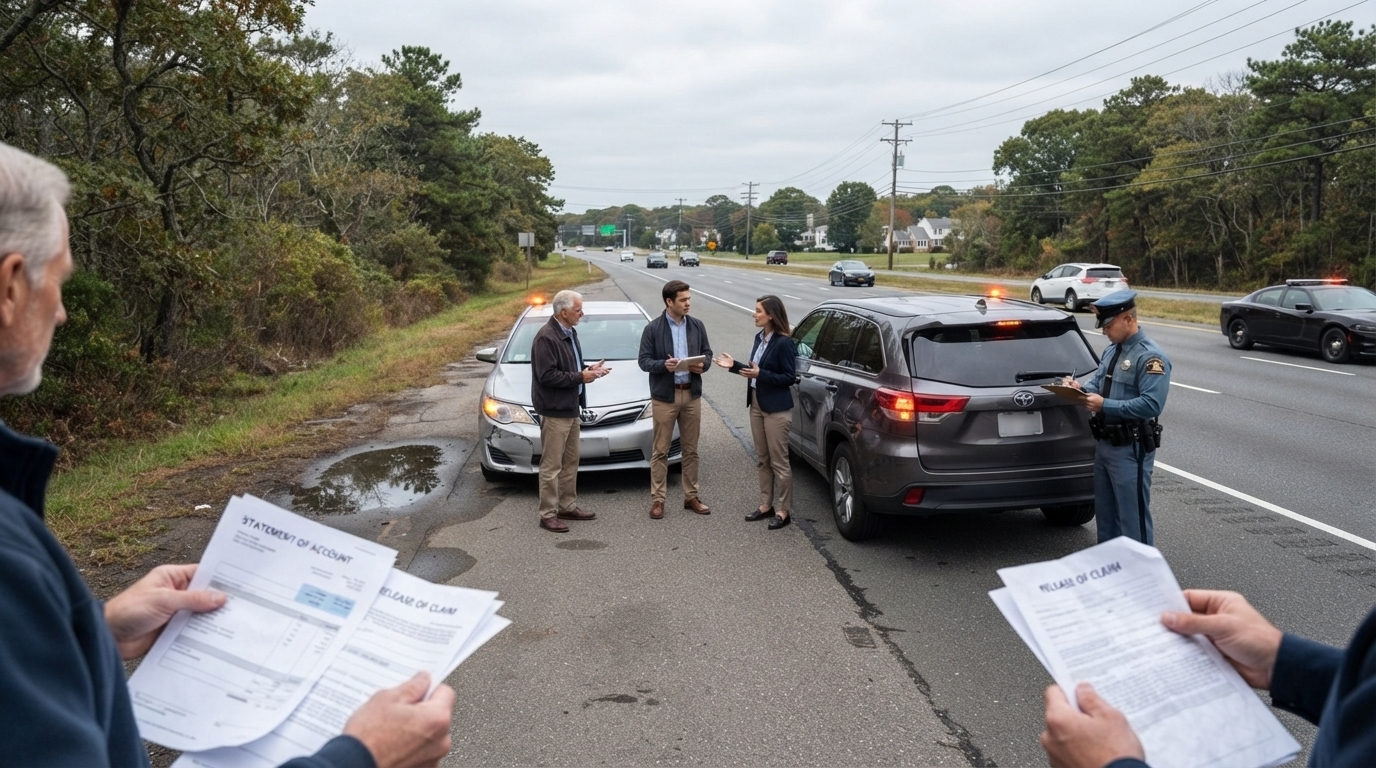
A car accident on Long Island can create immediate confusion, especially when injuries, vehicle damage, insurance questions, and police reports are involved. The first steps after a crash often affect medical treatment, insurance claims, evidence preservation, and any future injury claim. People involved in serious crashes may also review guidance from a car accident lawyer Long Island resource to better understand how New York accident claims are generally handled.
Quick Answer
After a car accident on Long Island, the safest first steps are to check for injuries, call 911 if anyone is hurt or the crash is serious, exchange information, document the scene, seek medical care, notify the insurance carrier, and preserve all accident-related records. In New York, injured people may also need to file a no-fault insurance claim quickly. Some crashes must also be reported to the DMV, especially when there is injury, death, or property damage over the required threshold.
Key Takeaways
- Medical care should come first, even when symptoms seem minor at the scene.
- Photos, witness details, police reports, and medical records can become important evidence.
- New York no-fault claims generally require fast written notice to the insurer.
- Some crashes must be reported to the DMV within 10 days.
- Serious injury claims may involve no-fault rules, liability evidence, insurance coverage, and New York’s serious injury threshold.
- Local crash facts, including road conditions, intersection layout, nearby cameras, and witnesses, may affect the claim.
Step 1: Check for Injuries and Call for Help
The first priority after any car accident is safety. Drivers, passengers, pedestrians, cyclists, and anyone else involved should be checked for injuries. If anyone is hurt, unconscious, bleeding, trapped, dizzy, confused, or complaining of pain, emergency help should be requested immediately.
A crash does not need to look catastrophic for injuries to be serious. Neck injuries, back injuries, concussions, internal injuries, soft tissue damage, and joint injuries may not be obvious right away. Adrenaline can also hide pain for hours or even days.
Calling 911 may also help create an official record of the accident. Police officers can secure the scene, arrange medical assistance, speak with involved parties, identify witnesses, and prepare a report. That report can become important later if an insurance company disputes how the crash happened.
Step 2: Move to Safety If It Is Possible
If the vehicles can be moved safely and no one needs emergency assistance inside the vehicle, moving out of active traffic may reduce the risk of a second crash. Hazard lights, reflective triangles, and a safe roadside location can help prevent further danger.
However, safety should come before preserving the vehicle position. If a person is seriously injured, trapped, or at risk of further harm, emergency responders should guide the next steps. People should not place themselves in active traffic to take photos or inspect vehicle damage.
Long Island roads can be especially risky after a crash because of congestion, high-speed traffic, narrow shoulders, and busy intersections. Safety decisions should be made carefully.
Step 3: Exchange Information With the Other Driver
After safety is addressed, drivers should exchange basic information. This typically includes names, addresses, phone numbers, license numbers, license plate numbers, insurance company names, policy information, and vehicle details.
It is usually best to keep this conversation short and factual. Arguments at the scene can make the situation worse. A driver should avoid admitting fault, guessing about what happened, or making statements like “I am fine” before being medically evaluated. Even polite comments can later be repeated in a different context.
If the other driver refuses to share information, appears intoxicated, leaves the scene, or becomes aggressive, police involvement becomes even more important.
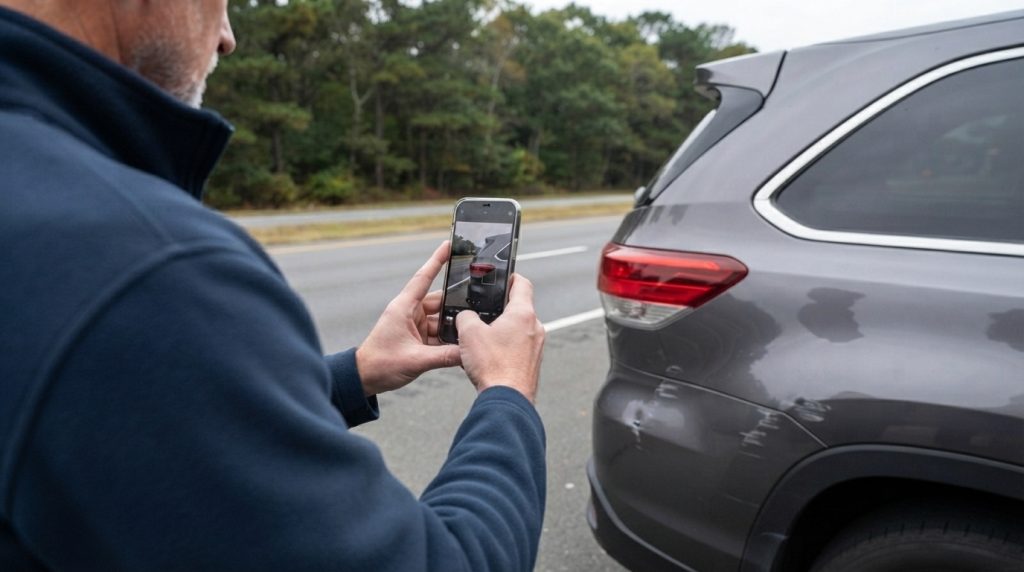
Step 4: Document the Accident Scene
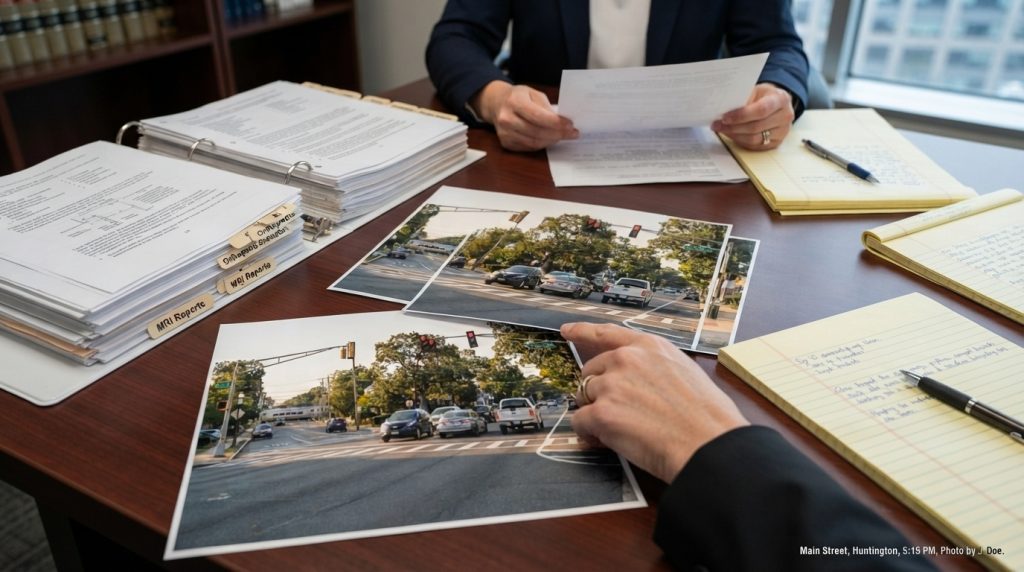
Evidence can disappear quickly after a crash. Vehicles are moved, road debris is cleared, weather changes, witnesses leave, and nearby video footage may be overwritten. When it is safe, photos and videos should be taken before the scene changes.
Useful documentation may include:
- Vehicle positions after the crash
- Damage to each vehicle
- License plates
- Traffic signs, signals, and lane markings
- Skid marks, debris, broken glass, or damaged guardrails
- Road conditions, weather, lighting, and visibility
- Nearby businesses, homes, traffic cameras, or security cameras
- Visible injuries, if appropriate
- The general intersection or roadway layout
People should also write down what they remember while the details are fresh. This may include the direction of travel, approximate speed, traffic light color, weather, road condition, and anything unusual before the collision.
Step 5: Identify Witnesses and Nearby Cameras
Witnesses can be very important in a disputed accident. A neutral witness may help explain which driver had the green light, who changed lanes, whether someone was speeding, or whether a driver appeared distracted.
If witnesses are present, their names and phone numbers should be collected if they are willing to share them. Nearby businesses or residential properties may also have surveillance cameras that captured the crash or the moments before it.
This can matter because footage is not always saved for long. Some businesses overwrite video within days. If a serious injury claim is possible, early efforts to preserve video may make a major difference.
Step 6: Seek Medical Care Promptly
Medical care is important for both health and documentation. Some injuries worsen after the initial shock fades. A person may feel “shaken up” at the scene but develop headaches, neck pain, numbness, dizziness, shoulder pain, back pain, or reduced mobility later.
Medical records can help connect the accident to the injury. They may show when symptoms began, what body parts were affected, what tests were performed, what treatment was recommended, and whether the injury interfered with work or daily life.
Delaying treatment can create problems. Insurance companies may argue that the injury was minor, unrelated, or made worse by waiting. This does not mean a delayed-treatment claim is impossible, but it can make the case harder to document.
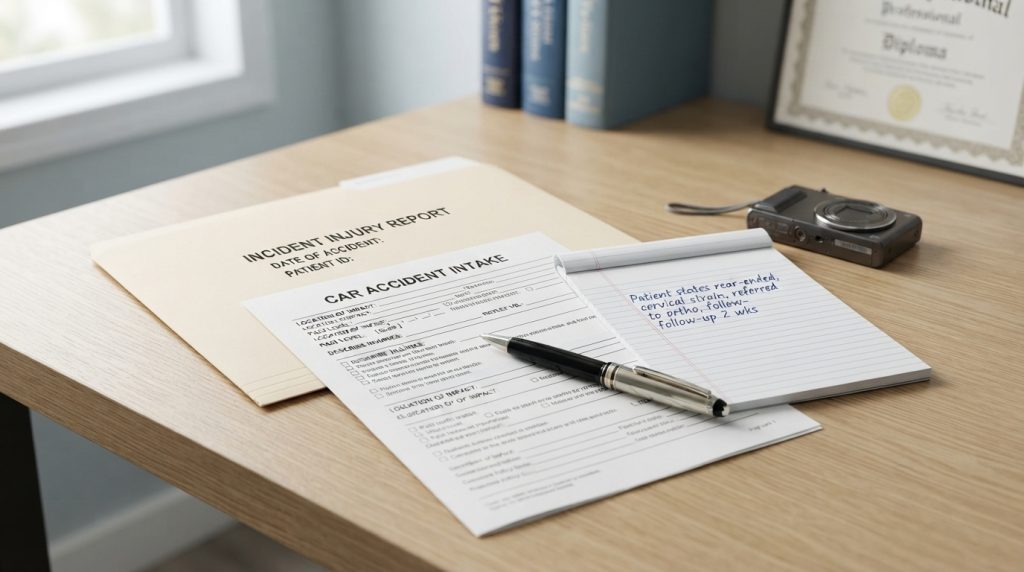
Step 7: Understand New York No-Fault Insurance
New York is a no-fault insurance state for many motor vehicle accident injury claims. This means an injured person may first seek certain benefits through the applicable no-fault insurance coverage, regardless of who caused the crash.
No-fault benefits may help cover medical expenses, lost earnings, and certain other reasonable accident-related costs. The New York Department of Financial Services no-fault guidance states that an injured person should file written notice of claim as soon as reasonably practicable, but generally no later than 30 calendar days after the accident unless there is clear and reasonable justification for late filing.
This deadline is one reason accident victims should not wait too long before notifying the appropriate insurer. A no-fault claim is different from a lawsuit against an at-fault driver, but both may matter after a serious crash.
Step 8: Know When a DMV Accident Report May Be Required
Some New York crashes must be reported to the DMV. The New York DMV accident report guidance explains that a reportable crash is one that causes a fatality, a personal injury, or property damage over $1,000 to the property of any one person. The DMV’s MV-104 form guidance also states that a report must be filed within 10 days for qualifying crashes.
This is separate from the police report. Many drivers assume that if police came to the scene, nothing else needs to be filed. That may not be correct. The driver may still have a DMV reporting obligation depending on the crash facts.
Step 9: Be Careful With Insurance Conversations
Insurance communication is part of nearly every car accident claim. However, statements to insurers should be accurate and cautious. An adjuster may ask about injuries, speed, traffic signals, road conditions, and how the crash occurred. Early statements can later affect the claim.
It is usually wise to avoid guessing. If a person does not know how fast another vehicle was traveling, does not know whether a driver was distracted, or does not know the full medical diagnosis yet, the safest answer is a truthful statement that the information is not yet known.
People should also be careful with recorded statements, broad medical authorizations, and quick settlement offers. A fast settlement may not account for future treatment, delayed symptoms, lost wages, or long-term limitations.
Step 10: Understand the Serious Injury Threshold
New York car accident lawsuits for pain and suffering may involve the serious injury threshold. Under New York law, a person generally needs to meet the legal definition of serious injury to recover non-economic damages in many covered motor vehicle accident cases. The New York Senate’s Insurance Law § 5104 explains that recovery for non-economic loss is limited unless the case involves a serious injury. The related Insurance Law § 5102 definition section lists categories that may qualify as serious injury.
This is why medical documentation is so important. Diagnostic imaging, specialist reports, physical therapy records, surgical recommendations, disability notes, and long-term treatment records may all become relevant when a serious injury issue is disputed.
Step 11: Watch the Legal Deadlines
Deadlines can affect whether a claim survives. The New York Courts statute of limitations timetable lists three years for many negligence-based personal injury claims. However, shorter deadlines may apply in specific situations.
For example, if a government vehicle, public bus, municipal employee, public roadway condition, or government-owned property is involved, notice rules may apply much earlier. Because deadlines depend on the facts, injured people should not assume every car accident case follows the same timeline.
What Evidence Matters Most After a Long Island Car Accident?
Different accidents require different evidence. A rear-end crash, left-turn collision, multi-car pileup, pedestrian crash, rideshare accident, truck collision, and hit-and-run may all require different proof. However, several types of evidence commonly matter.
Important evidence may include:
- Police accident reports
- DMV reports
- Photos and videos from the scene
- Vehicle damage records
- Witness statements
- Medical records and bills
- Proof of lost wages
- No-fault claim forms
- Repair estimates
- Dashcam or surveillance footage
- Cell phone records, if distraction is disputed
- Traffic light or roadway evidence
- Expert accident reconstruction in serious cases
People researching local legal options may also review a Farmingdale legal office location when looking for resources connected to Long Island accident claims.
How Fault Is Evaluated After a Crash
Fault may depend on traffic laws, driver behavior, roadway evidence, vehicle damage, witness statements, and expert analysis. Common fault issues include speeding, tailgating, distracted driving, unsafe lane changes, failure to yield, running a red light, improper turns, drunk driving, and failure to adjust for weather or traffic conditions.
Some cases involve shared fault. New York generally allows fault to be divided among the parties. If an injured person is partly responsible, that may affect the value of the claim, but it does not automatically end the case.
Fault disputes can become more complicated when there are multiple vehicles, commercial vehicles, unclear lane positions, poor road design, missing signs, or conflicting witness statements.
How Car Accident Settlement Value Is Considered
No article can accurately predict the value of a car accident claim without reviewing the evidence. Settlement value may depend on injury severity, medical treatment, lost income, future care needs, liability strength, insurance coverage, and the long-term impact on daily life.
A minor soft tissue claim with short treatment will usually be evaluated differently from a crash involving surgery, fractures, permanent limitations, traumatic brain injury, or long-term disability. Publicly available car accident settlements can show examples of serious injury outcomes, but every case depends on its own facts and documentation.
Common Mistakes to Avoid After a Car Accident
Some mistakes can make a claim harder to prove. Accident victims should be careful to avoid actions that weaken documentation or create unnecessary disputes.
Common mistakes include:
- Leaving the scene before exchanging information
- Failing to call police when the crash is serious
- Waiting too long to seek medical care
- Not reporting the accident to the insurer
- Missing no-fault deadlines
- Forgetting to file a required DMV report
- Posting about the crash on social media
- Admitting fault before all facts are known
- Accepting a quick settlement before the full injury impact is clear
- Losing photos, repair records, bills, or witness details
For serious crashes, reviewing information from personal injury lawyers near me resources can help injured people understand why documentation, insurance timing, and liability evidence matter.
FAQs About Long Island Car Accidents
Should someone call the police after a car accident on Long Island?
Police should be called when anyone is injured, a driver leaves the scene, a vehicle is unsafe to drive, there is significant damage, or a driver appears impaired or uninsured. A police report can also help document the crash for insurance and liability purposes.
How quickly should medical care be sought after a crash?
Medical care should be sought as soon as possible, especially if there is pain, dizziness, numbness, headache, limited movement, confusion, or visible injury. Some symptoms appear later, but early evaluation can protect health and create important medical documentation.
What is the no-fault deadline in New York?
New York no-fault guidance generally requires written notice of claim as soon as reasonably practicable, but no later than 30 calendar days after the accident unless there is a clear and reasonable justification for late filing. Other claim-related deadlines may also apply.
Does a police report prove who was at fault?
A police report can be important, but it does not always settle the issue of fault. Insurance companies and attorneys may also review photos, witness statements, vehicle damage, medical records, traffic laws, video footage, and expert opinions.
Can someone recover damages if partly at fault?
New York generally allows fault to be divided. If an injured person is partly at fault, compensation may be reduced based on the assigned percentage of responsibility. Shared fault does not automatically prevent a claim.
Final Thoughts
The steps taken after a Long Island car accident can affect medical care, insurance benefits, evidence preservation, and future legal options. Injured people should focus on safety, medical treatment, accurate reporting, timely insurance notice, and careful documentation. When injuries are serious or fault is disputed, the claim may require deeper review of no-fault rules, liability evidence, medical records, and New York accident law.